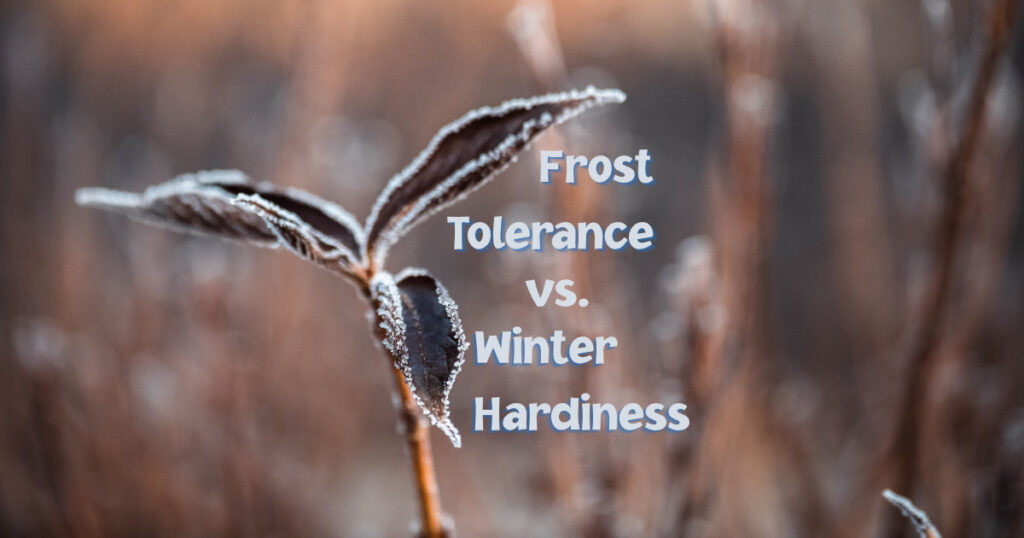
If you’ve spent any time reading gardening advice this time of year, you’ve probably come across plenty of warnings about frost. Cover your plants! Bring your containers inside! Protect those blooms before temperatures drop!
And while there’s good reason for some of that advice, here’s something beginner gardeners might not realize: not all plants are bothered by frost. In fact, some are built to handle it!
So, how do you know which plants will make it through a frosty night and which ones need a little extra help?
It comes down to understanding the difference between frost tolerance and winter hardiness. These two gardening terms are often confused, but knowing how they differ can help you make better decisions about protecting your garden as the temperatures drop.
Let’s take a closer look at what frost actually does to plants, which ones can handle it, and when you really need to worry.
Frost Tolerance vs. Winter Hardiness: What’s the Difference?
It’s easy to assume that if a plant is hardy enough to survive winter, it should be able to handle a little frost. But that’s not always how it works.
Let’s break it down.
Winter hardiness describes a plant’s ability to survive cold temperatures over the winter months. It’s usually connected to a plant’s hardiness zone, which helps gardeners understand whether a perennial or shrub can withstand the typical winter conditions in their area.
Frost tolerance, on the other hand, describes how well a plant can handle freezing temperatures and frost on its leaves, flowers, and other above-ground growth.
These two things don’t always go hand in hand.
For example, a hardy perennial might survive an entire winter in your garden but still have its flowers damaged by an unexpected early frost in September or October.
Meanwhile, a tender annual might be completely knocked out by just one night of freezing temperatures.
So, while a plant’s hardiness zone is a helpful guide, it doesn’t mean every part of that plant is frost-proof!
Why Does Frost Damage Plants?
Frost forms when temperatures drop to freezing (0°C / 32°F) or below and moisture freezes on exposed surfaces.
But the damage happens inside the plant, too.
When temperatures get cold enough, water inside plant cells can freeze. Ice formation can damage cell walls and interfere with the plant’s ability to move water and nutrients. Once temperatures warm up again, affected leaves and flowers may look wilted, darkened, mushy, or almost water-soaked.
You might notice:
- Blackened or brown leaves: Tender foliage can darken as damaged tissue begins to break down.
- Drooping flowers: Blooms are often more sensitive to frost than the rest of the plant.
- Soft or mushy stems: Severe frost damage can affect the plant’s stems and new growth.
- Wilted-looking foliage: Even when the soil is moist, damaged plant tissue may struggle to hold its shape.
Not all frost damage looks the same. Some plants might have a few damaged leaves, while others can lose their entire above-ground growth.
The good news? Damaged foliage doesn’t automatically mean the whole plant is dead.
Why Some Plants Handle Frost Better Than Others
There are a few reasons why certain plants can shrug off a chilly night while others struggle.
- Their natural cold tolerance
Some plants are simply better equipped to handle freezing temperatures. Hardy perennials and shrubs have adapted to survive colder conditions, while tropical plants and tender annuals are much more sensitive.
For example, shrubs like Panther® and Calico Kitty™ Ninebark are naturally cold-hardy and can handle chilly winter temperatures, returning to the garden year after year. Many hardy perennials, like Yellowstone™ Stonecrop, are also well-equipped to survive colder weather, even if their above-ground growth dies back for the winter.
- The type of growth they have
Soft, tender leaves and delicate flowers are generally more vulnerable to frost than thicker, tougher foliage. This is one reason you might see frost damage on a plant’s flowers while its leaves and stems remain relatively unaffected.
Take Savannah Sunset™ Ninebark, for example. Its woody stems and established structure are much better equipped to handle cold weather than tender annual flowers. Similarly, hardy hydrangeas like Bubble Bath™ and Dragon Baby® can survive winter, even though their flower heads and fresh spring growth may still be affected by frost.
- How established the plant is
A healthy, established perennial may be better equipped to handle seasonal temperature changes than a newly planted one that hasn’t had much time to settle in. Young plants and fresh new growth can be particularly vulnerable to unexpected cold snaps.
- How quickly temperatures drop
A gradual change in temperature gives plants more time to adjust to seasonal conditions. A sudden overnight frost, especially early in the fall or late in the spring, can catch tender plants off guard.
When Should You Protect Your Plants From Frost?
Not every frost needs to send you running outside with blankets and buckets!
Knowing which plants need protection can save you time and help you avoid unnecessary garden work.
Here are a few situations where a little extra care can make a difference.
Protect tender annuals and tropical plants.
Plants like begonias, impatiens, and other tender annuals are sensitive to freezing temperatures. If frost is in the forecast, bring container-grown plants indoors or move them somewhere sheltered if possible.
For plants growing in garden beds, you can use a frost cloth or lightweight garden cover to provide some protection during a cold night.
Give newly planted perennials a little extra attention.
If you’ve recently added plants to your garden, a layer of mulch around the root zone can help insulate the soil and protect the roots from temperature fluctuations.
Just keep mulch from piling directly against the plant’s stems or crown.
Protect spring blooms from late frosts.
An unexpected spring frost can damage emerging buds and flowers, even on plants that are perfectly hardy in your growing zone.
If a late frost is in the forecast and your favourite plants are already budding or blooming, consider covering them overnight with a breathable frost cloth. Remove the cover once temperatures rise again.
Let hardy perennials do their thing.
Many hardy perennials naturally die back or lose their foliage as temperatures drop. This is a normal part of their seasonal cycle, not necessarily a sign that something has gone wrong.
If a frost damages the above-ground growth of a hardy perennial, the roots may still be perfectly healthy beneath the soil.
In many cases, there’s no need to intervene. Let the plant rest and prepare for its next growing season.
What to Do After a Frost: Don’t Reach for the Pruners Just Yet!
One of the biggest mistakes beginner gardeners can make after a frost is rushing outside to cut everything back.
We get it. Nobody loves seeing their once-beautiful garden looking a little worse for wear. But it’s worth waiting before you start pruning.
Here’s what to do instead:
- Give your plants some time. Wait until temperatures have warmed up and you can get a better look at the damage. Some plants may recover from a light frost, while others will show more obvious damage.
- Check the stems and base of the plant. Damaged leaves don’t necessarily mean the roots or main stems are affected. Look for healthy, firm growth before deciding what needs to go.
- Avoid removing healthy growth. If only a few leaves or flowers are damaged, there’s no need to cut back the entire plant.
- Wait until spring for major pruning on many hardy perennials. Leaving healthy stems and foliage in place over winter can help protect the plant’s crown and provide habitat for beneficial insects. You can tidy things up when new growth begins in spring.
And remember, some plants have beautiful seedheads and winter structure that are worth keeping around. A little frost damage doesn’t mean your garden has lost all its interest!
A Frosty Night Doesn’t Mean a Failed Garden
Frost is a normal part of gardening, and learning how different plants respond to it is all part of becoming a more confident gardener.
The key is remembering that winter hardiness doesn’t necessarily mean frost-proof. A plant can be perfectly suited to your growing zone and still have flowers or foliage damaged by an unexpected freeze.
So, the next time you wake up to a frosty garden, don’t lose hope! Some plants might need a little protection, others are simply settling into their winter routine, and a few might surprise you with just how tough they really are.
Plant. Water. Relax. Even when the forecast calls for frost, you’ve got this!
