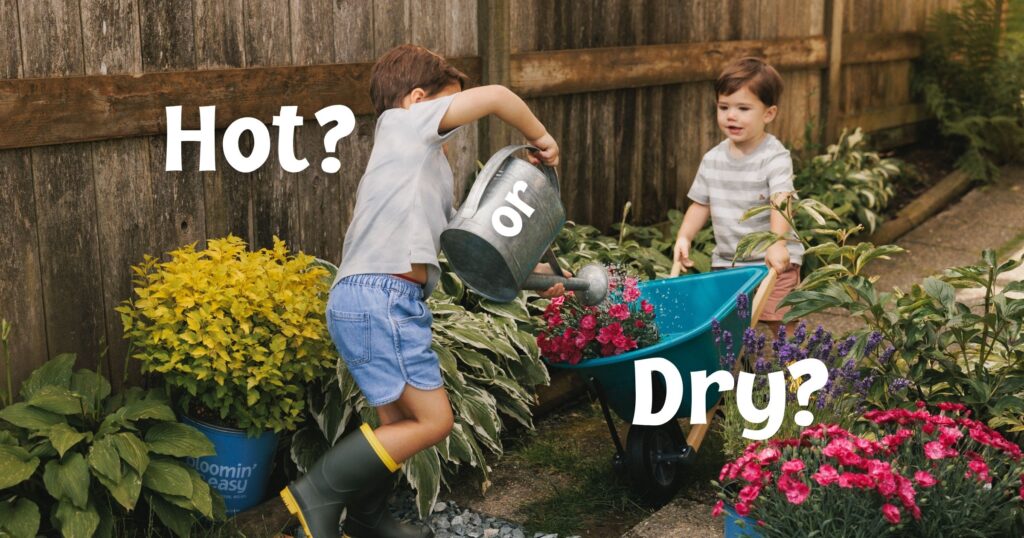
Heat Tolerant vs. Drought Tolerant: What’s the Difference (and Why It Matters in Summer)?
If you’re like me, you’ve probably assumed that if a plant can handle drought, it must also love the heat — and vice versa. After all, dry climates are usually hot, right? But after working in the garden industry for a while, I’ve learned that plants can be one and not the other. So, I thought I’d share what I’ve learned — especially now, with summer heat in full swing.
Last summer, we dove into the specifics of drought tolerant plants — those garden heroes that can thrive with very little water (if you missed it, check out that post here). But this time, we’re focusing on their often-confused counterpart: heat tolerant plants. These two traits are commonly grouped together, but they’re not the same — and knowing the difference can make a big impact on your garden.
So, What’s the Difference?
Drought tolerant plants are built to survive long stretches without water. They often have deep roots, waxy leaves, or other adaptations that help them store or conserve moisture.
Heat tolerant plants, on the other hand, can handle high temperatures without wilting, burning, or going dormant. They keep performing when the sun is blazing while other plants may show crispy, curly leaves. Some key characteristics of plants that tolerate the heat include:
- Thick, leathery, or reflective leaves
Like tanned skin or sunscreen, these kinds of leaves protect the entire shrub from intense UV’s.
- Efficient cooling systems
Get this! Plants sweat too! It’s called transpiration or the way water moves through a plant from the roots, up through the stems, and eventually evaporating through tiny pores in the leaves called stomata. This cools the plant down and moves nutrients up from the roots to the stem and up to the leaves. This process also helps to maintain the right “turgor pressure” or what makes your plants stand up nice and strong and upright. Just like you on a sweaty day!
- Open or airy growth habit
Unlike a compact, thick bush, these plants can often look more delicate as they leave space between leaves and grow branches far apart from each other. This is important because air circulation helps cool down the plant and allows for the leaves to receive balanced sun exposure without overwhelming or scorching the leaves.
As a result, this combination of unique characteristics allows full direct sun tolerance and strong bloom performance.
While there’s definitely some overlap (especially in desert-adapted plants), not all drought tolerant plants are heat lovers, and not all heat lovers are drought champions.
Why Does It Matter?
Depending on where you live, your garden might face high heat, low rainfall, or both. Being from California, I need my plants to handle scorching temps and water restrictions. But in other regions, you might just need shrubs that won’t fry when temps hit 90°F/32°C+ on the regular, even if rainfall is steady.
Understanding the difference can help you build a more resilient, low-maintenance garden that thrives through whatever summer throws at it.
Heat Tolerant (But Not Necessarily Drought Tolerant) Shrubs:
- Hardy Hydrangeas– Like Hot Sauce™ or Bouncy™ Hardy Hydrangea
- Reblooming Hydrandeas – Like Kimono™ or Frill Ride® Reblooming Hydrangea
Azaleas – Like our Ever After™ series in Pink, Blush, and Ruby.
Drought Tolerant (But Not Always Heat Loving) Shrubs:
- Phloxes – Like our Ka-Pow® Pink Garden Phlox
- Potentillas – Like Bella Bellissima®, Bianca®, and Sol®
- Snowberry – like our Pinky Promise®
Plants That Do Both
Of course, some rockstar shrubs are both drought and heat tolerant — perfect for low-maintenance, summer-proof gardens:
- Echinaceas – Like our Double Scoop™ Strawberry or Watermelon Deluxe
- Butterfly Bush- Like Birthday Cake®
- Sedums– Like Puff Pastry™ Raspberry or White Chocolate
So for your garden…
As you plan (or troubleshoot) your summer garden, consider what your plants are really facing: lack of water, high temps, or both. Choosing the right shrubs for your local climate — whether they’re heat lovers, drought dodgers, or both — can save you time, water, and a lot of crispy leaves.
